Clay for Peace exhibition
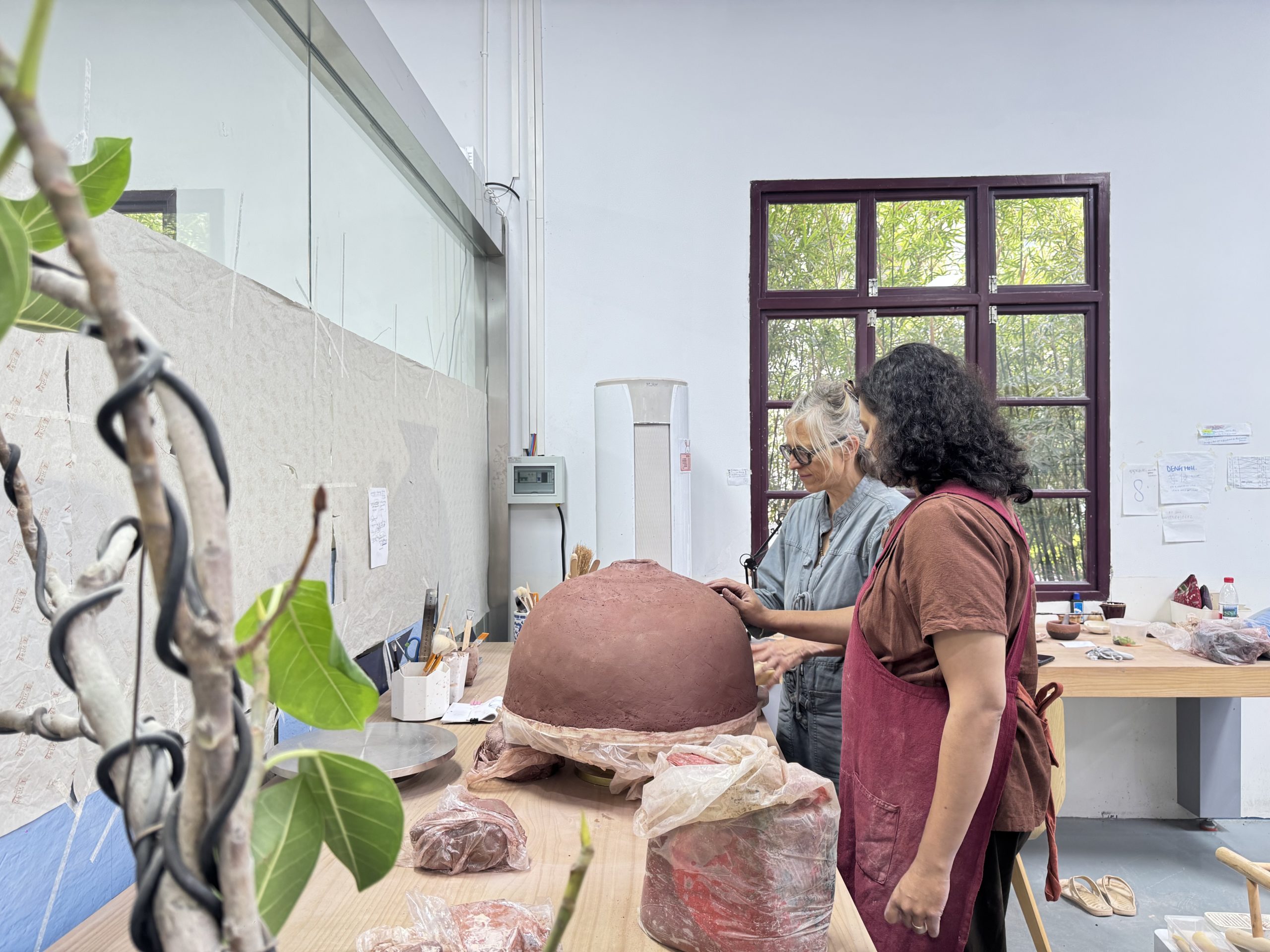 Anja Seiler and Rashi Jain collaborating on their artwork for the Clay for Peace exhibition |
|
CLAY FOR PEACE
Clay for Peace was a special section of the IAC International Residencies Exhibition, bringing together collaborative works created by IAC resident artists during their time in China. The projects were developed in collaboration with fellow residents, Chinese IAC members, or local artists, bringing together different artistic practices, experiences and cultural perspectives. |
|
|
|
|
|
|
|
PANORAMA AND ABSTRACT EXPRESSIONAntonio Fois (United Kingdom) and Babs Haenen (Netherlands) |
|
|
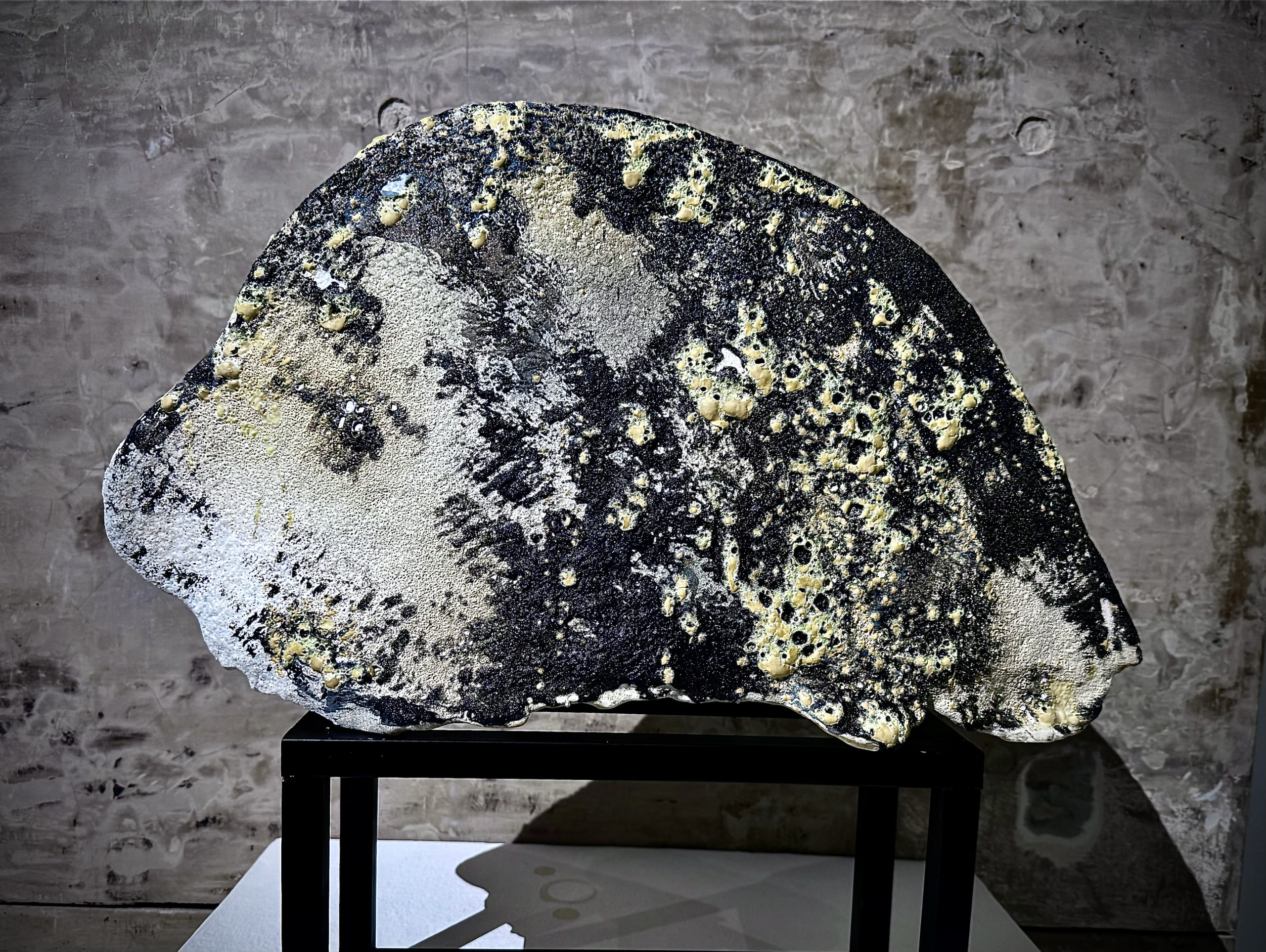
Babs Haenen is internationally recognised for her expressive ceramic practice, shaped by influences ranging from Italian painting to the organic forms and rhythms of nature. Antonio Fois’s work is distinguished by its painterly sensibility, drawing inspiration from the visceral and emotionally charged imagery of Francis Bacon. Their collaboration emerged from a shared artistic language, bringing together complementary approaches to form, surface, and expression. In Panorama, Haenen developed the work through a plaster drawing, pressing black and white porcelain slabs to create a dynamic relief-like surface. Fois subsequently intervened through the application of underglazes and glazes, enriching the work with painterly gestures and chromatic depth. The resulting piece reflects a dialogue between sculptural construction and painterly expression. |
|
|
|
|
|
|
|
« SIT DOWN PLEASE »: AN EXPERIENCE OF DIALOGUEMarina Rodriguez (Argentina) and Rosana Tagliari Bortolin (Brazil) |
|
| “Sit down, please” is more than a request—it invites people to share, listen, and reflect. By sitting on the ceramic bench and speaking into the amplifier, participants become part of the work. The space encourages active listening, amplifies voices, and values each contribution, promoting dialogue and collective understanding. This experience transforms the spectator into an active participant, reinforcing collaboration and the importance of expression in a shared environment. | |
|
|
|
|
|
|
FORMS OF DIALOGUE – 对话的形式Antonio Fois (United Kingdom) and Lin Tianyu (China) |
|
| TianYu Lin and Antonio Fois are ceramic artists whose practices converge through a shared engagement with Chinese calligraphy, scholar’s rocks, and the philosophical traditions embedded within these cultural forms. Their collaboration emerged through a series of conversations while both artists were based at Taoxichuan, where a mutual interest in language, materiality, and cultural heritage laid the foundation for an ongoing artistic exchange. Although their circumstances changed after Lin completed his residency, the dialogue continued across distance. Each artist developed work independently while remaining connected through a sustained process of discussion, reflection, and mutual influence. This mode of collaboration—simultaneously shared and autonomous—became central to the project itself. The project is framed by the concept of “New Epigraphy” (新⾦⽯). Drawing inspiration from the traditional Chinese discipline of jinshi (epigraphy), which studies ancient inscriptions on bronze and stone, New Epigraphy reinterprets these historical practices through a contemporary lens. It emphasises the materiality of writing, the temporality of ceramic processes, and the ways in which text and object co-create meaning. Within this framework, each artist responds to classical literary and philosophical sources while expanding the possibilities of ceramic sculpture as a medium for calligraphic expression. The resulting works bring together Lin’s interpretation of Li Bai’s celebrated poem “Invitation to Wine” (将进酒) and Fois’s exploration of the Chinese character “中” (Center). Through the intersection of language, writing, text, form, and ceramic practice, the collaboration reflects a shared inquiry into cultural traditions, systems of meaning, and the capacity of dialogue to generate new forms of artistic expression. |
|
|
|
|
|
|
|
IN AN UNSTABLE WORLD, THE POSSIBILITY OF NEW LIFE IN A FIELD OF BROKEN HEARTSBernard Kerr (Australia) and Lana Rakanovic (Serbia) |
|
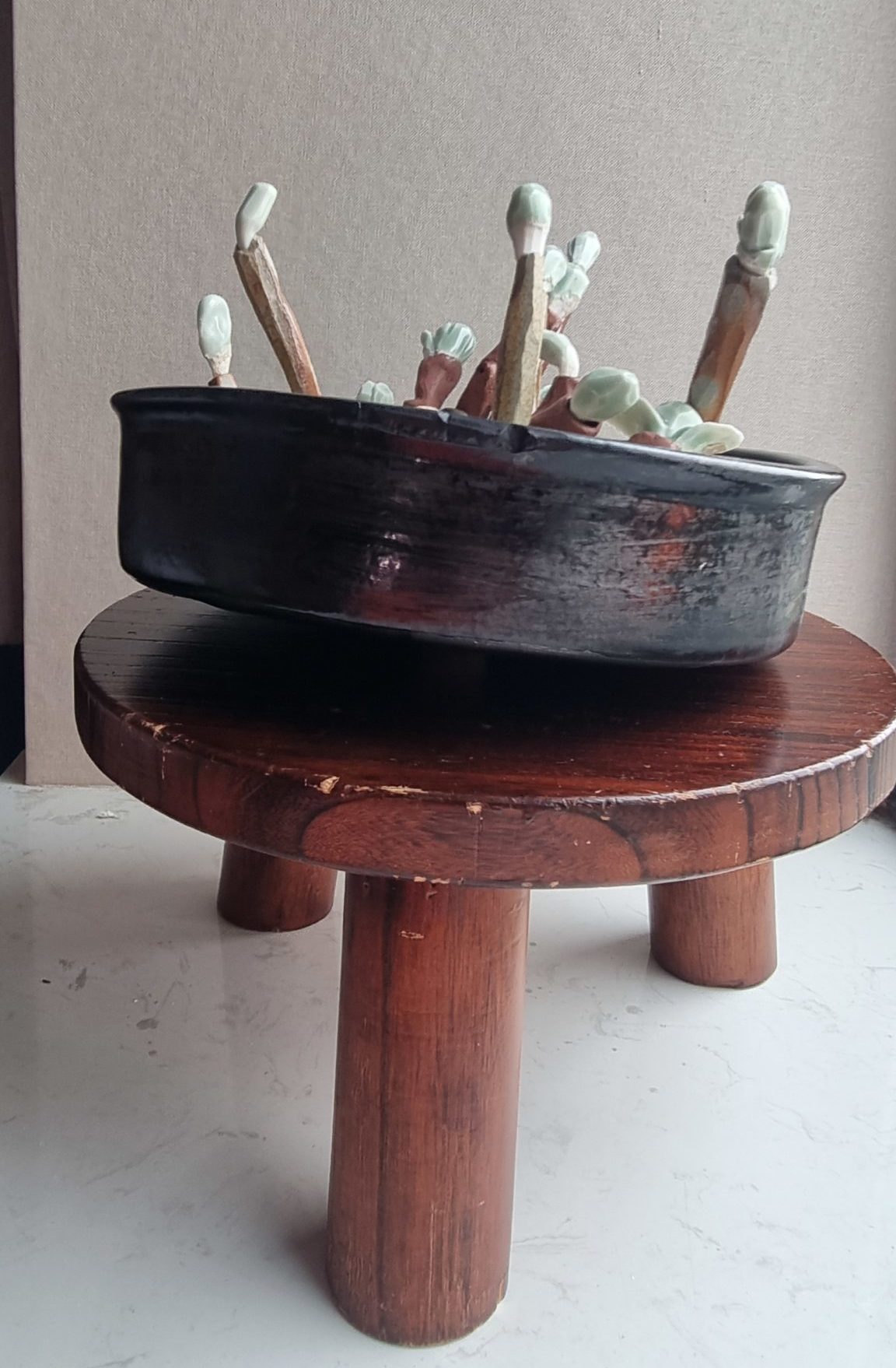
| This work grew out of an ongoing dialogue that we had concerning differences between our life experiences, cultures and lifestyles and how we saw things happening in the world. Issues of optimism and cynicism, of the human condition, of cultural determinism, power, corruption politics and the place of capitalism and socialism all were discussed as we grappled with how to make a ceramic work that addressed such a topic that, whilst deserving of the greatest attention, might easily become superficial and cliché. We believe human conflict to be inevitable and Lana experienced aspects of the Balkan conflict and the break-up of the Nation of Yugoslavia in her childhood, the legacy of which still reverberates in the minds and perceptions of those who experienced it living in the Balkans today. The one thing we agreed on was that whilst conflict was inevitable, the element of hope, of renewal and new growth was the only salvation for human beings. From the smallest beginnings, and dreams, hope and new life in an unstable world were the symbols of hope we decided to use in our work. The vessel form is on a sloping conical base, so it is always unstable. We were inspired by seeing some children in chairs that had bases that allowed them to pivot. We also saw celadon cups made like this so that they were also self-righting. The idea of sprouting seeds suggested new beginnings and hope and linked to Taoist ideas of the innate energy and naturalness or ‘pu’ and the ‘xing’ or innate good nature that is in us all. The ground from which our seedlings emerge is constructed of broken hearts. Each seedling is articulated with springs so that this is an interactive and kinetic work and refers to qi and energy embedded in all aspects of the universe. When we understand this, peace may become manifest in the world I threw the forms required and Lana constructed the seedlings. We assembled the piece together. Working together was a good experience for both of us. |
|
|
|
|
|
|
|
INTERRUPTED, YET CONNECTEDPiotr Marek Nowak (Norway) and Diàna Boitmane (Latvia) |
|
|
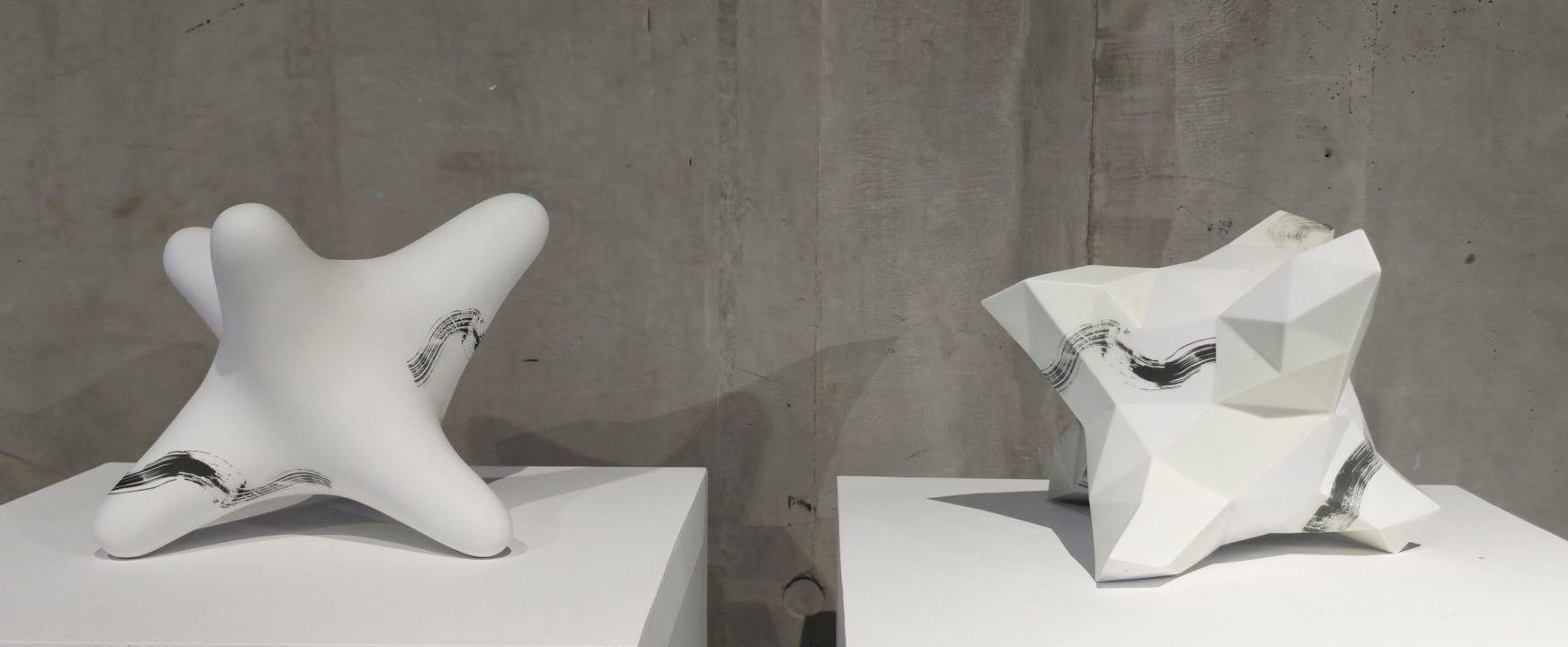
Fragmented, displaced, and transformed, ink gestures traverse two porcelain forms, suggesting that connection endures through interruption, tension, and distance. |
|
|
|
|
|
|
|
EARTH TONESAnja Seiler (Switzerland) and Rashi Jain (India) |
|
|
Very intuitively we started to throw the forms we were individually working on- on a small scale in Yixing local clay. While Rashi was working on bodies related to the uncarved block , Anja was building amphora like huge vessels. While questioning ourselves how to create a connection between our practices and the pieces, we started to combine them in finding a position where one piece would shoulder the other one. The pieces lean on each other, hold and position themselves searching for harmony and balance. In order to truly communicate we associated the pieces in joining them in a way so that the two volumes would become one . We tried to find a way to make them sound using them as a rudimentary instrument , which would allow to send and receive tones. The openings function either as ear or mouth – depending on how you want to use their communicative potential. Rolling them in clay, then created traces which mark the coming together of a new form. |
|
|
|
|
|
|
|
PAGODA – LOST IN TRANSLATIONHeidi Mc Kenzie (Canada) and Alexander Perlin (Belarus) |
|
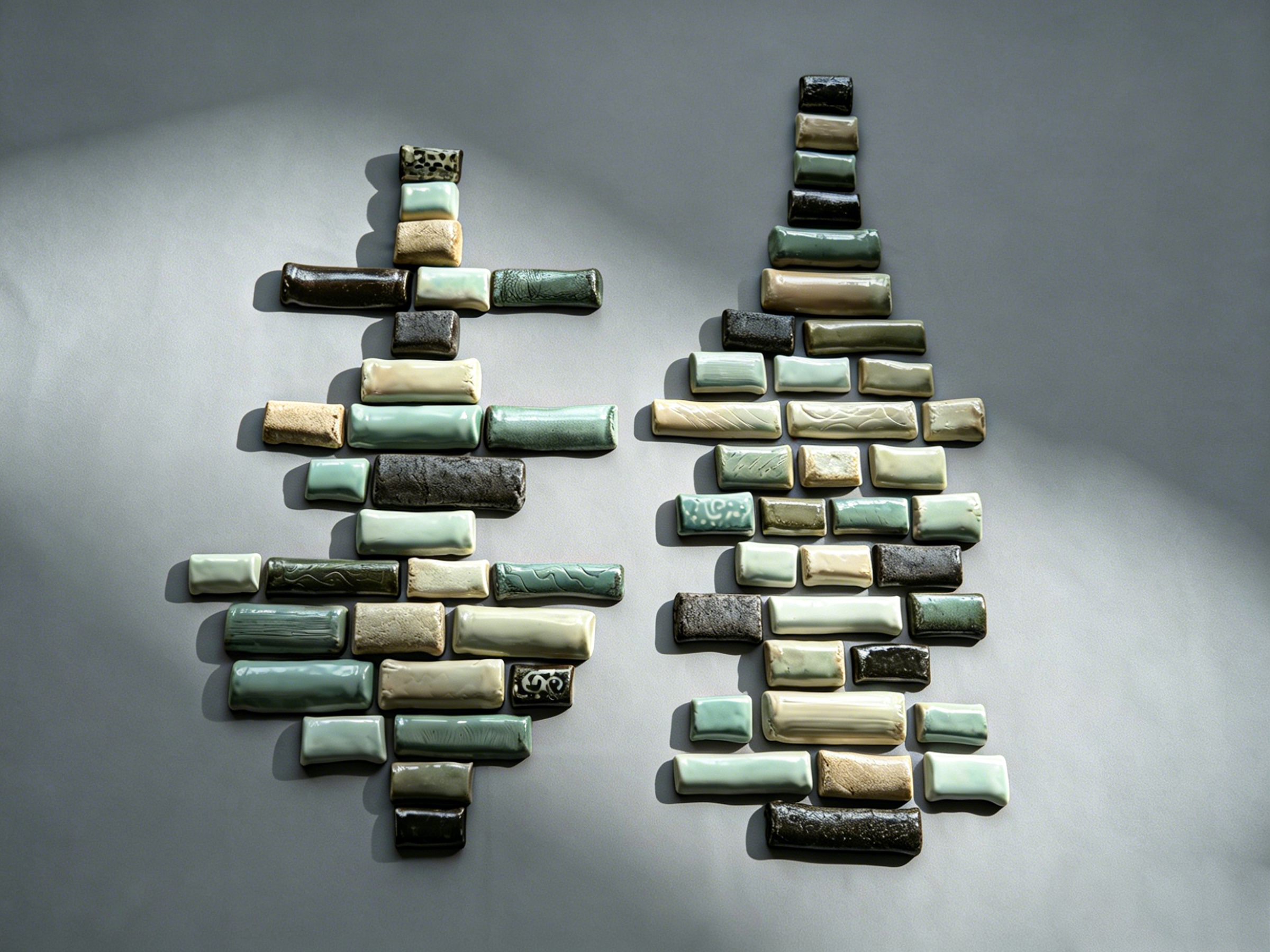
| This collaborative Clay for Peace project was born out of a friendship that emerged at Wang’ou Longquan Taoxichuan Cultural and Creative Centre. Heidi McKenzie from Canada, and Alexander Perlin from Belarus, found a meeting place where Alexander’s extensive experience working as an artist in China and Heidi’s idea to work with the visual voice prints came together. It was a third resident, Bernard Kerr from Australia, who pointed out that the voiceprint turned on its side resembles the Chinese pagoda. We decided upon the phrase, “lost in translation” because it plays on the idea of how challenging, yet rewarding, our lived experience as foreigners communicating on a daily basis with the local community can be. Alex and Heidi expanded on this concept and used multiple press-moulds of bamboo-like nodes. They chose to make the pieces from local clay bodies, fired in the gas kiln with Longquan Ru and Iron celadons. It was Heidi’s first time working with celadon glazing, and Alex’s first time working with press moulds. The two artists worked together in all aspects of the creation of the work. | |
|
|
|
|
|
|
EMBRACING FLAWSPep Boadas (Spain) and FU-YU Jingdezhen porcelain factory |
|
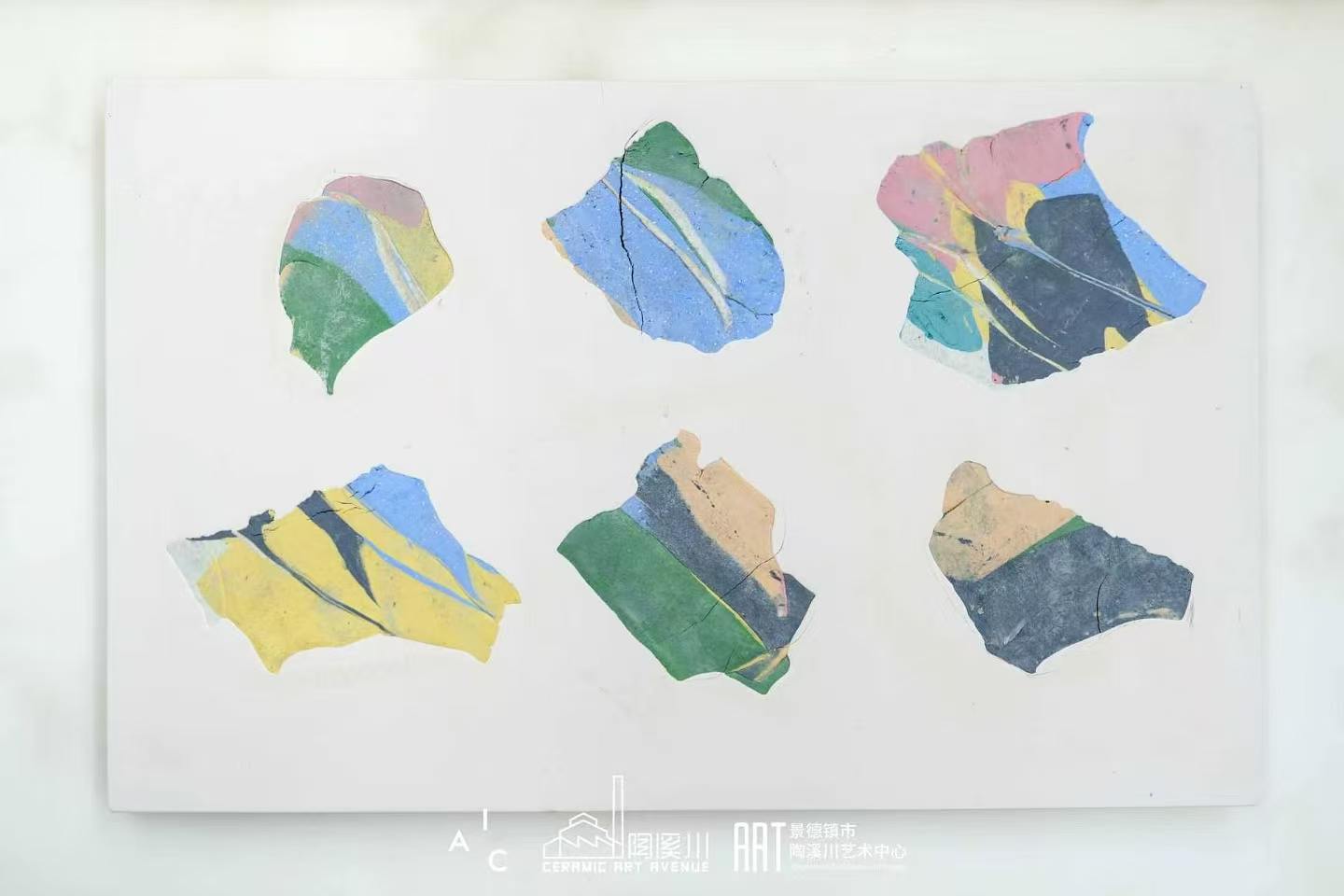
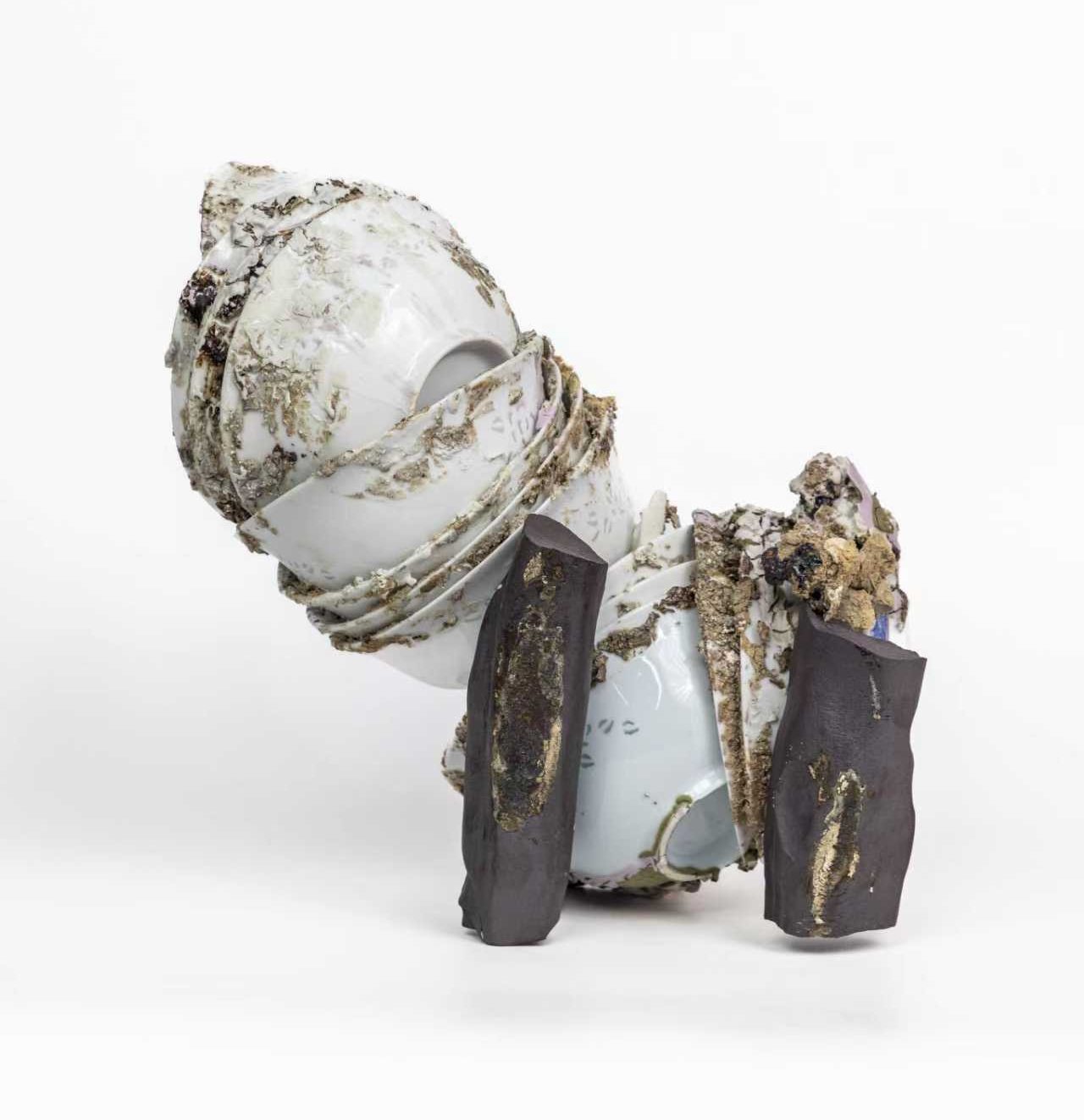
| This installation emerges from a collaboration with the FU-YU porcelain factory, driven by a desire to connect with one of the city’s ceramic realities and propose narratives that encourage the reuse of ceramic materials. These compositions aim to bridge two seemingly opposing worlds, creating spaces for common dialogue where material serves as the link between diverse realities. By focusing on waste, the installation tells stories through the imperfections and mistakes inherent in the creative process. The project highlights the potential of discarded ceramics, transforming them into a medium for expression and connection. Each piece reflects the history embedded within these materials, inviting viewers to reconsider their relationship with waste and craftsmanship. Through this exploration, the installation not only honors traditional ceramic practices but also promotes innovation and sustainability. By fostering a conversation around the beauty of imperfection and the value of reuse, this exhibition seeks to inspire a deeper understanding of the narratives that can arise from overlooked materials. It challenges us to see beyond the surface and appreciate the stories that shape our environment, encouraging a collective reflection on how we can reshape our relationship with materials in contemporary practice. |
|
|
|
|
|
|
|
WINGED KEELSharbani Das Gupta (United States) and Jiang Haochen (China) |
|
| The form was made by Sharbani Das Gupta and glazed and fired by the glaze master ad artist Jian Haochen. It refers to ideas of stability and flight and the balance between the two. Derived from the form of the breastbone of a bird it has echoes of the massive keel which keeps a ship upright in the sea. | |
|
|
|
|
|
|
SISTERHOODShayonti Salvi (India) and Yang Hongge (China) |
|
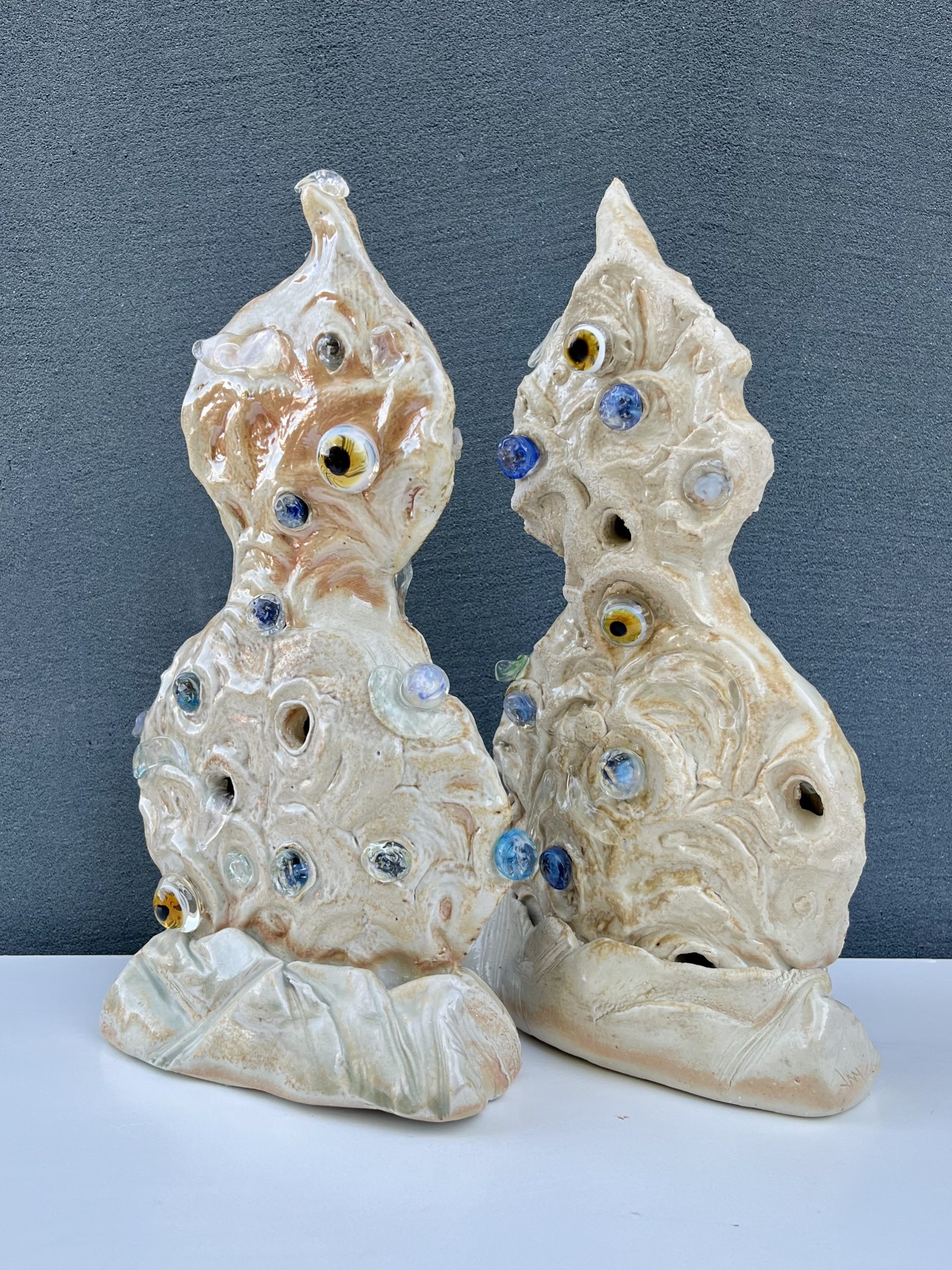
| Clouds drift through Boshan while monsoon rain falls across Mumbai. Between these two distant places, water becomes a quiet thread of connection — elemental and fluid. It is this same material that brings together two artists from China and India, each transforming silica through different traditions: one through glass, the other through clay. The collaborative work takes the form of the gourd, a symbol in Chinese culture associated with health, prosperity and protection from evil spirits. Historically carried as a vessel and medicine holder, the gourd embodies healing and the safeguarding of life. Here, it becomes both form and metaphor: a shared container for hope and coexistence. At a time when tensions between nations continue to shape the world, the artists find camaraderie through material and process. Clay and glass demand patience, humility and surrender; they remind us that making is an act of listening as much as creation. Though fragile in their raw state, both materials require fire in order to transform. Wood-firing and kiln-forming become processes through which heat and flame alter the materials, leaving behind traces of rupture and beauty. Fire here becomes a paradox: an element of destruction that also creates strength and permanence, much like peace itself often emerges only through conflict and reconciliation. |
|
|
|
|
 |
|
ZEN, SITTING IN FORGETFULNESS – 禅止 / 禅, 坐忘Agnes Husz (Hungary/Japan) and Zhian Wang (China) |
|
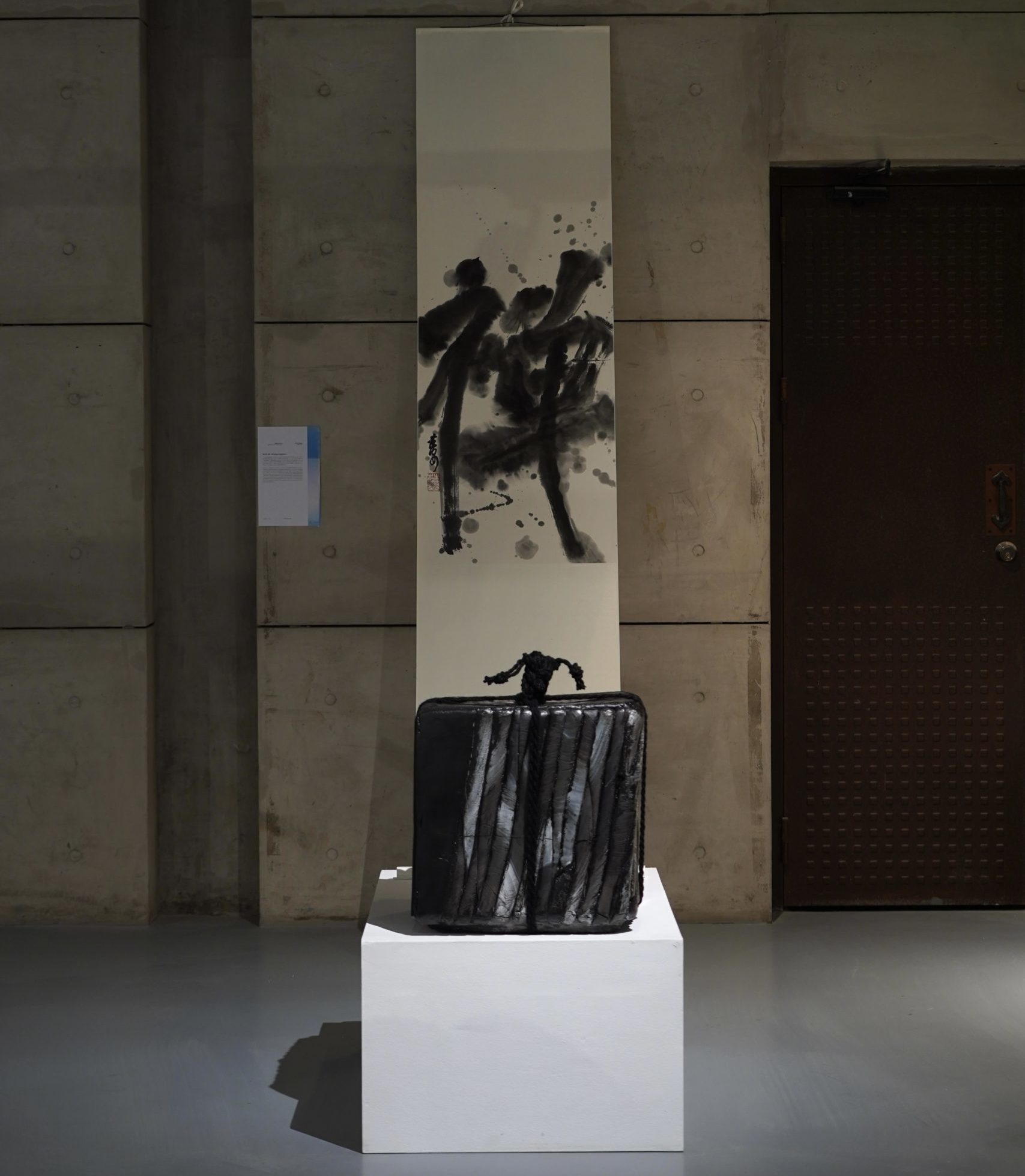
| Created in collaboration between a Chinese calligraphy artist and a European ceramicist living in Japan, this installation reinterprets the traditional Japanes Tome-Ishi stop stone for our contemporary era, returning to its ancestral Chinese philosophical roots. Within a single unified artwork, the essences of Zen and Tao intersect. Organic, earthy textures of ink and fired clay clash intentionally against sleek white plastic, sparking contemplation on the balance between man-made industry and untamed nature. Blown up into monumental scale, the tome-ishi transforms from a quiet garden marker into a stirring symbolic voice. It beckons us to slow down, pause our busy lives and turn inward, to find deep peace that harmonizes our inner selves and the world around us. |
|
|
|
|
 |
|
THE PHYSICS OF COEXISTENCEElizabeth Dychter (Uruguay) and Ji Hyun Chung (South Korea) |
|
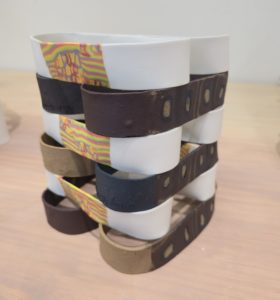
| We are testing the limits of clay and connection. The oval rings rest on our tables—Elizabeth’s jade clay, holding bright, painted traces, and Jihyun’s Zisha clay, rich with iron and local history. The project is an exercise in structural correspondence; we are building a column by alternating our distinct mediums. There is an inherent displacement here, a subtle tension born from stacking two entirely different clay bodies with separate shrinkage rates and tempers. Yet, as the bands touch and rise toward the studio ceiling, they begin to support one another. It is a fragile equilibrium. The delicate, patterned surface of jade clay and the raw, unadorned strength of dark earth hold a quiet conversation through weight and counterweight, finding a way to coexist in a single, unified form. | |
|
|
|
 |
|
A GARDEN OF TWO EARTHSMariel Tarela (Argentina) and Ji Hyun Chung (South Korea) |
|
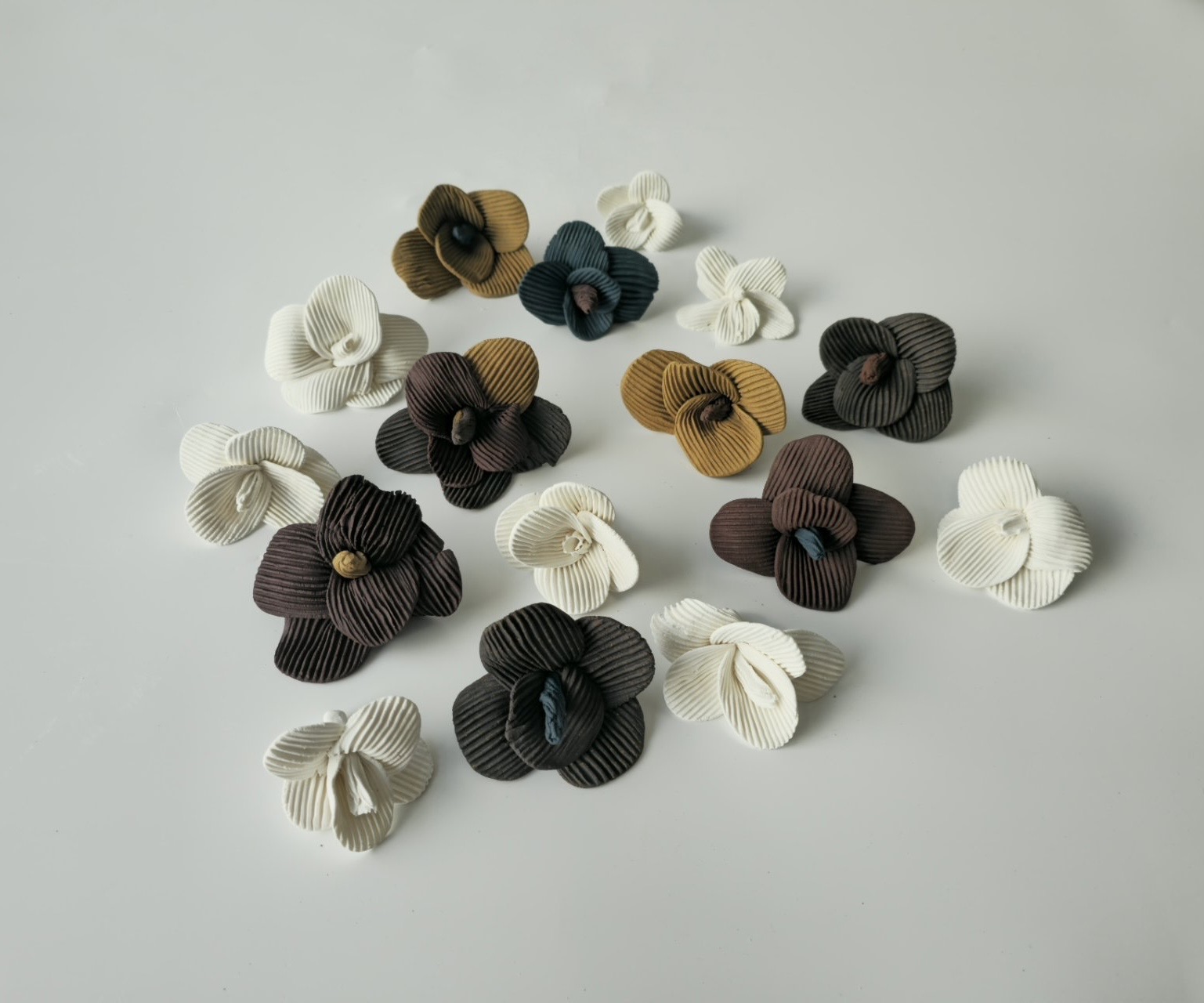
| On the wooden board, a quiet conversation unfolds between two different worlds. Mariel shapes her stories with pristine white clay, capturing a luminous, delicate stillness. Beside hers, I mold my thoughts using Zisha clay—the deep, textured iron-rich earth that connects me to the historic rhythm of this land. Though our origins and mediums are starkly contrasted, our fingertips have found a shared language through the rhythmic pleats of these ceramic petals. Her white blossoms catch the light, while my dark clay absorbs it, creating a sensitive cartography of our shared residency experience. This is not just a collection of ceramic flowers; it is a cross-portrait of two artists holding space for each other, blending our distinct cultural trajectories into a single, resonant garden. | |
|
|
|
 |
|
SUNA VENTOVilma Villaverde (Argentina) and Kiti Kurarova (Russia) |
|
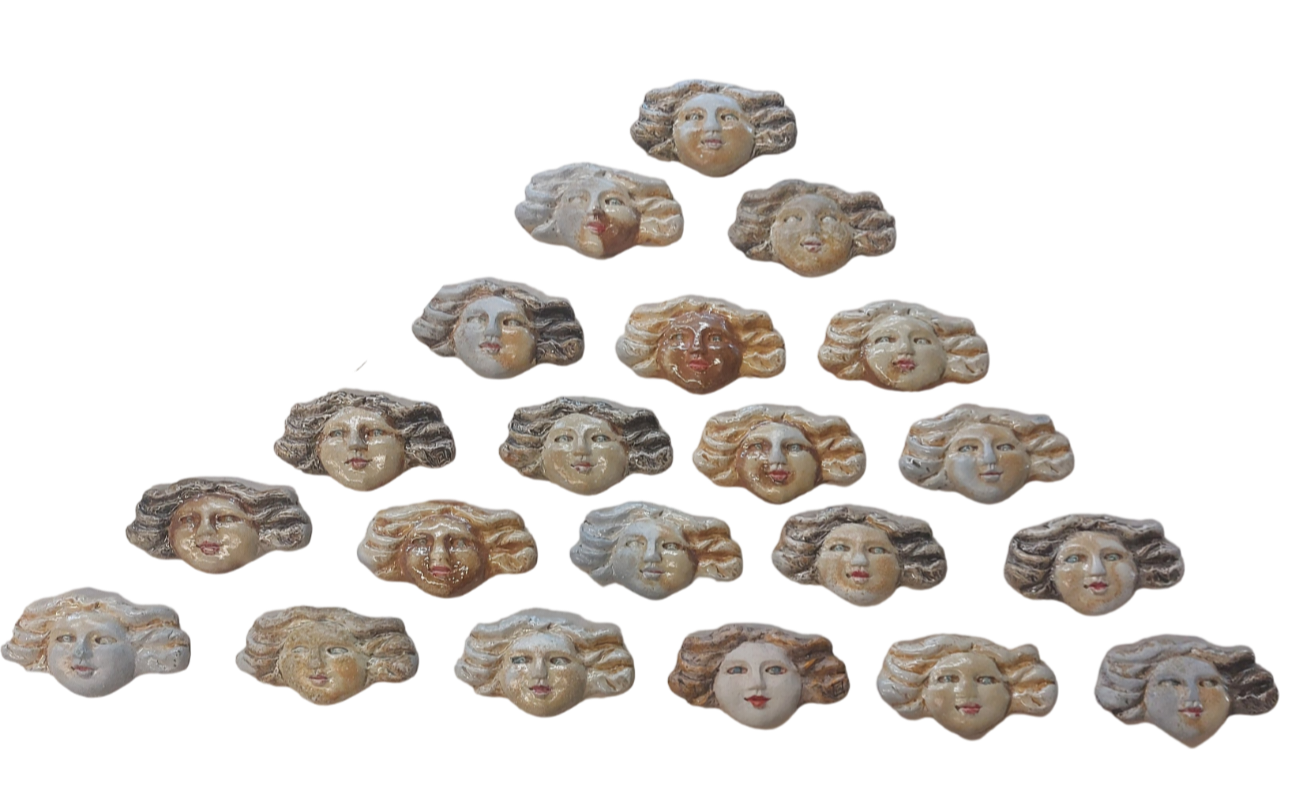
| Creativity is the creation of communication. This project began with communication and interaction between two artists of different generations from different parts of the world with different approaches to work and materials. The installation poetically combines natural and unnatural, geometric and non-geometric forms, emphasizing the need to reflect on their asymmetry. It also questions our relationship to a hybrid world in which the artificial blends with the natural and the human with the non-human, creating a hesitation between the authentic and the repeated object. This project focuses our attention and allows for free interpretation of different subjects. And it uses the ability of art to unite people and keep everyone together despite initial differences. |
|
|
|
|
 |
|
DECONSTRUCTIONVlad Basarab (Romania) and Neha Gavand Pullarwar (India) |
|
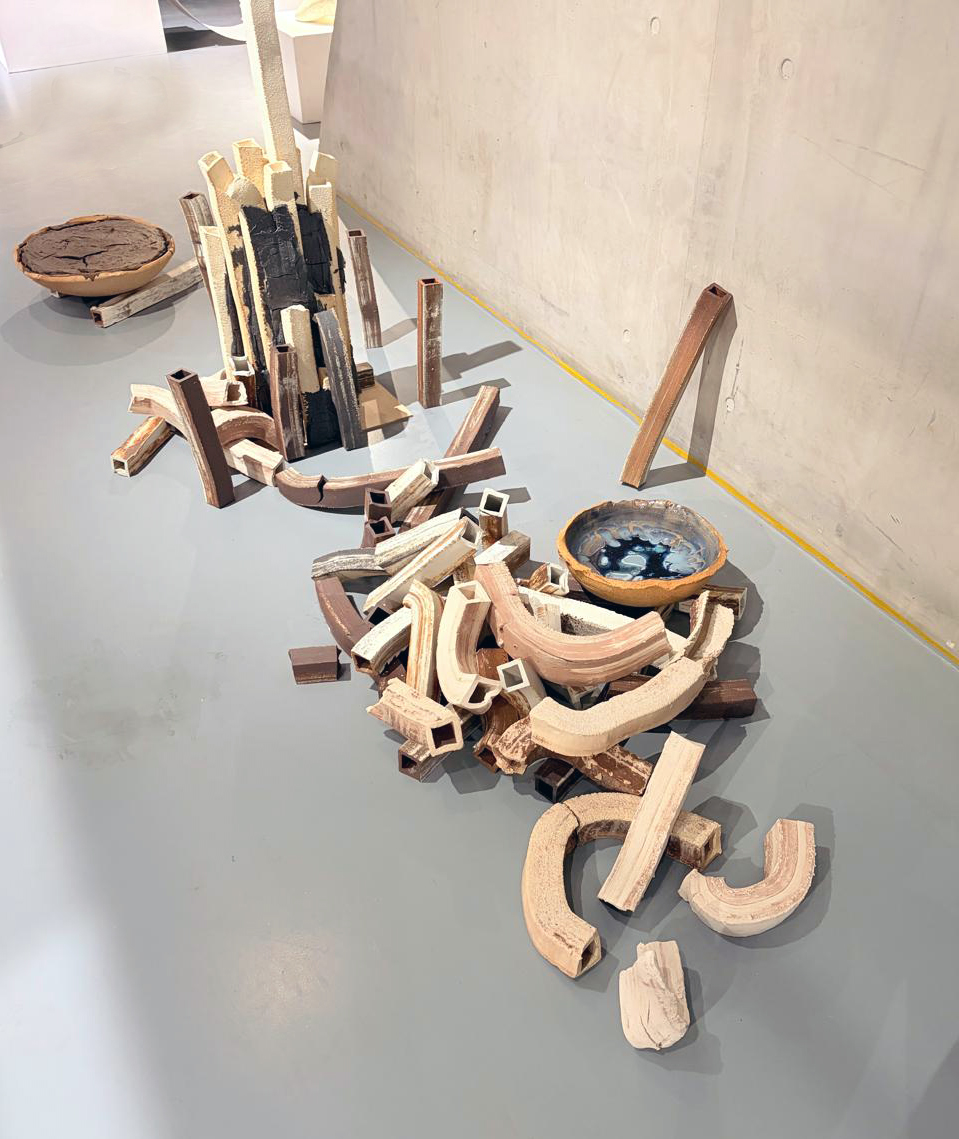
| This project investigates the fragile condition of contemporary existence through the symbolic language of collapsing architecture and fractured landscapes. Drawing inspiration from the collapse of the Twin Towers, the disintegration of human-made structures is meant to make us reflect upon the vulnerability of the human condition and the instability of the systems upon which societies depend. Rather than focusing on the destructive aspects of war, the project examines the inherent human desire for peace, resilience, and need for collective healing in the aftermath of crisis.The installation consists of two ceramic towers, which evoke architectural structures on the verge of collapse. The two vertical elements are juxtaposed by two containers (handmade bowls)—objects historically associated with nourishment, community, and sustenance. The bowls become metaphors for shared resources and collective responsibility, raising urgent questions about access to water in a time of increasing environmental uncertainty. One of the bowls will be made out of white porcelain and it will be filled with cracked clay, while the other one will be made of black stoneware and filled with water. Cracked clay surfaces and fragmented architectural forms reference the growing reality of drought, desertification, and ecological imbalance, paired with a damaged humanity. The earth itself appears wounded, its fissures echoing both geological fractures and social divisions. Through the materiality of clay, the work connects the body, the land, and the built environment, all subjected to forces of pressure, change, and impermanence. At its core, the project explores the tension between collapse and renewal. The ceramic bowl, despite its fragility, remains a powerful symbol of care, survival, and hope. Positioned beneath unstable structures, these vessels suggest the possibility of holding, preserving, and sharing what is essential for life. Through sculpture and installation, the work invites reflection on contemporary global challenges, particularly water scarcity, environmental degradation, and conflict, while intending to stimulate the audience to see in peace and interdependence as necessary foundations for the future. The project transforms clay into a site of remembrance and resistance, where the cracks of the earth become both warnings and consideration for collective transformation. |
|
|
|
|
 |
|
WORLD PEACE NOW – 世界 和平 当下Studio DeSimoneWayland (Netherlands) and Baya (China) |
|
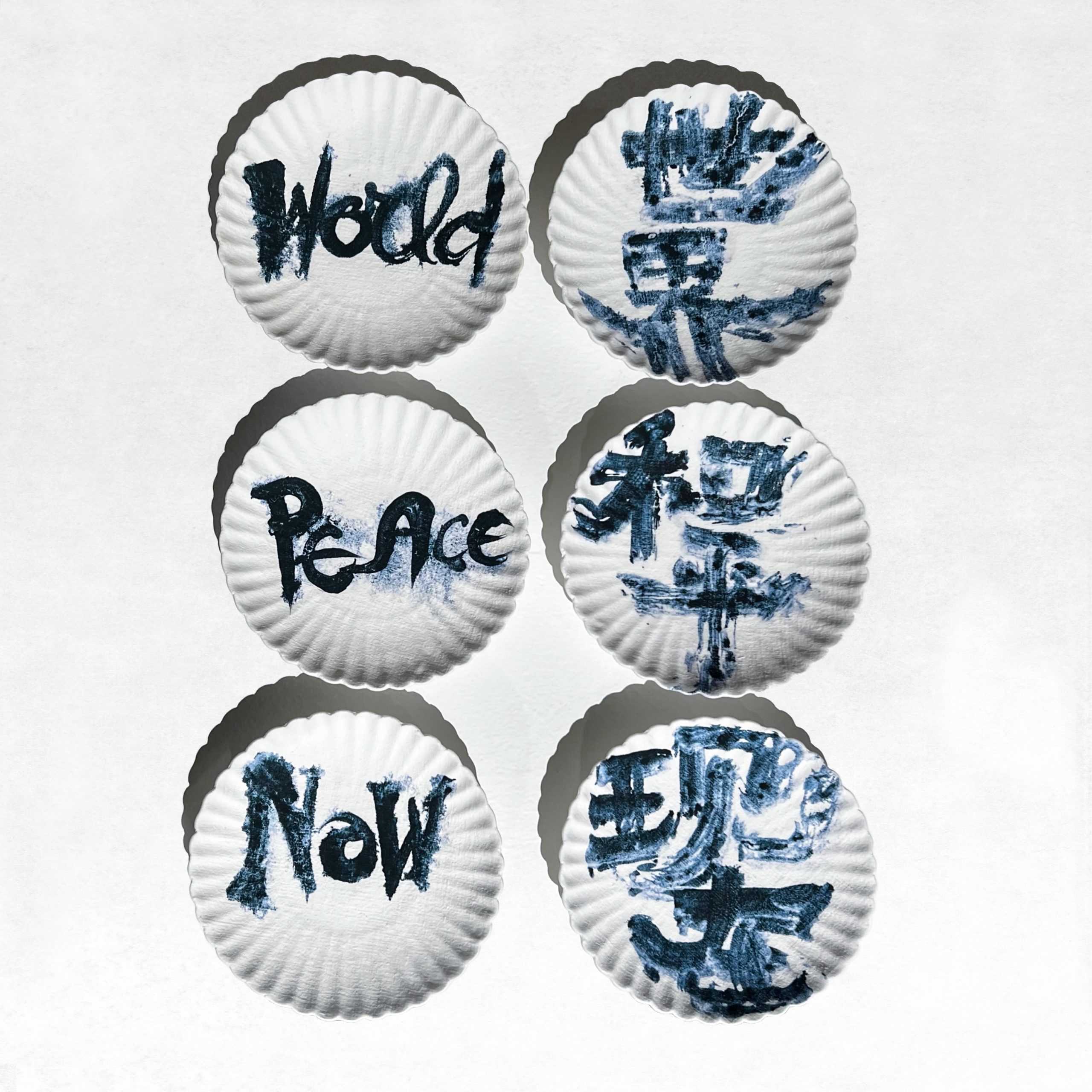
| This work is a collaboration between Studio DeSimoneWayland and Chinese calligraphy artist Baya Zhian. Studio DeSimoneWayland selected a traditional Chinese Chrysanthemum plate, applied their signature textile structure to its surface, and cast it in unique Jade Porcelain from Jingdezhen. Because the studio primarily works with unglazed porcelain, these pieces have also been left unglazed to highlight the intricate details of the textile texture. In response, Baya Zhian painted three of the plates using cobalt underglaze, her exquisite calligraphy spelling out the Chinese characters 世界 (World), 和平 (Peace), and 当下 (Now). Studio DeSimoneWayland then paired these with three additional plates spelling out the same message in English: World Peace Now. Leaving the cobalt underglaze unglazed results in a striking indigo blue that beautifully accentuates the textile structure of each unique piece. By rendering « World Peace Now » across two distinct cultures and languages, the installation serves as a powerful reminder that harmony requires both global unity and a collective grounding. This message is especially urgent in the current state of the world. |
|
|
|
|
 |
|
HIBAKIJOMOKU: SEEDS OF HOPEShalini Dam (India) and Maria Lammana (Italy) |
|
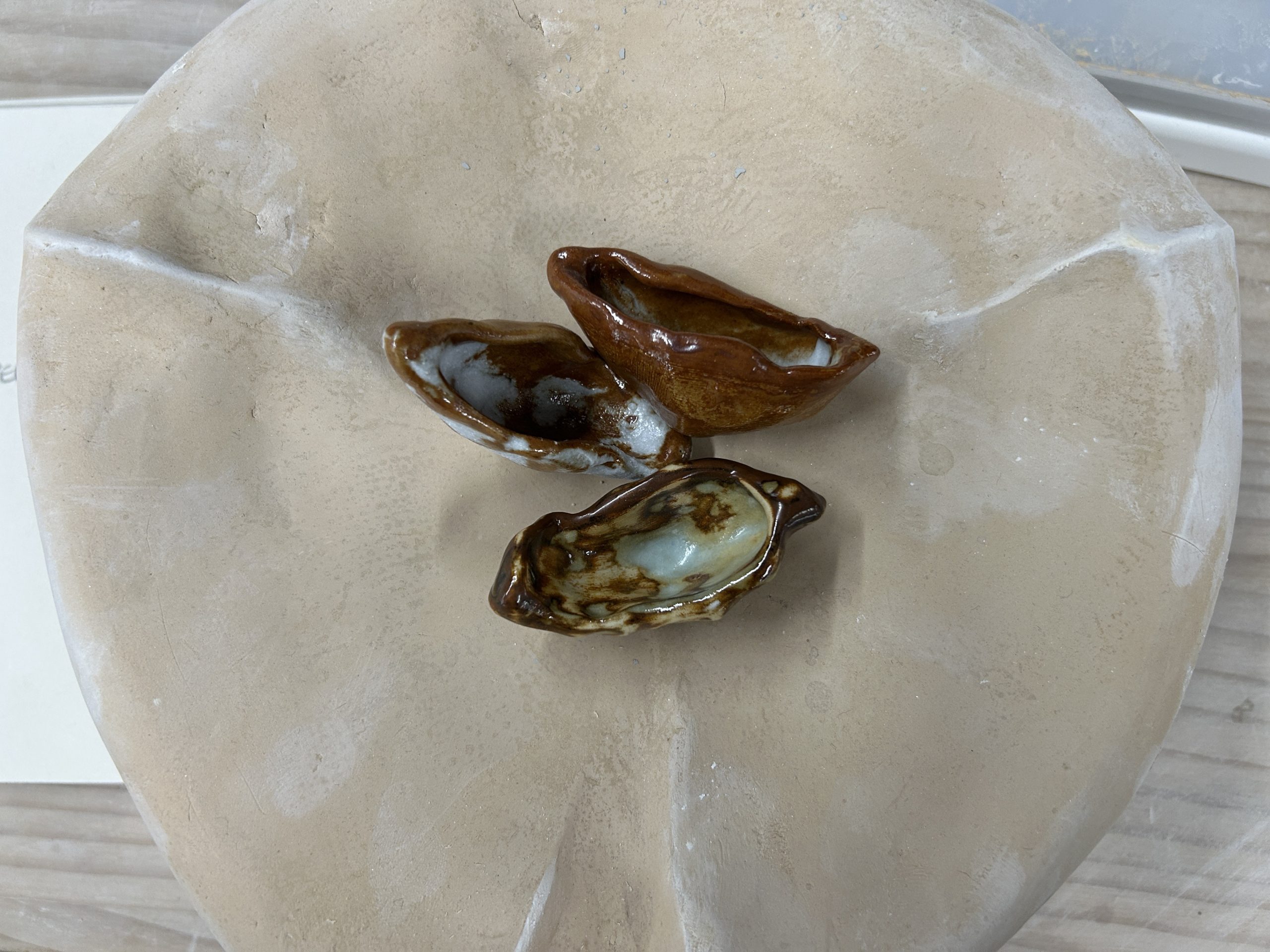
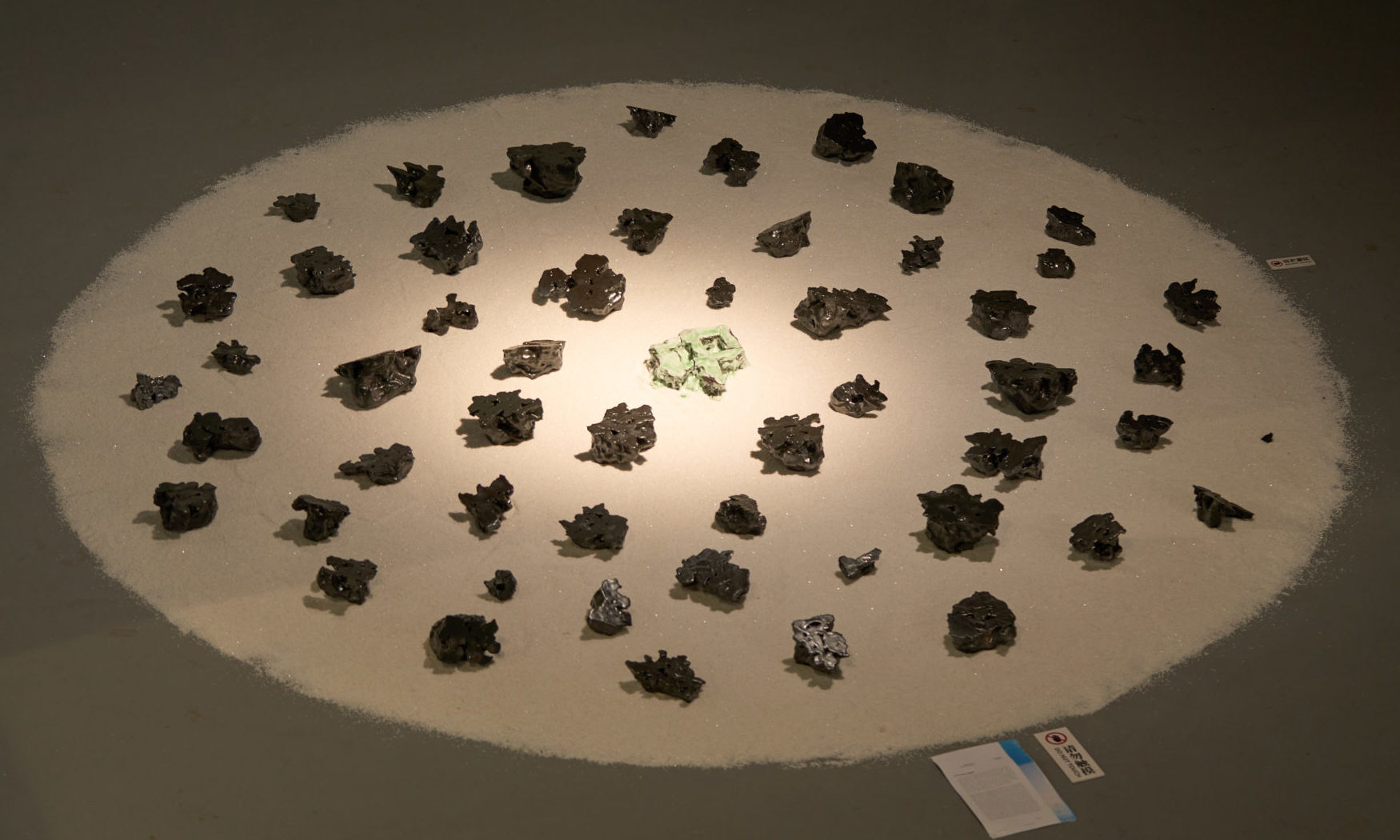
| Hibakijumoku, is the Japanese term for Trees that survived the atomic bombings of Hiroshima and Nagasaki in 1945. This project is a collaborative artistic proposal, between Shalini Dam and Maria Lamanna, that bridges the primordial element of clay with the living legacy of peace. The project reconstructs a collection of seeds and leafs from Hibakujumoku, the atomic-bombed trees of Hiroshima and Nagasaki that survived the 1945 nuclear devastation. By integrating these symbols of botanical resilience with the universal medium of ceramics, this initiative embodies the core mission of the IAC’s Clay for Peace platform: fostering cross-cultural dialogue, healing, and global reconciliation. The installation consists of suspended Pods with the different Hibakijumoku seeds, Gingko, Persimmon, Camellia, Camphor… Above them hang the lenticular tiles symbolically representing their regeneration from one angle, and yet from another angle you see charred remains of trees. Illustrating both, the scattering of hope across borders and the lightness of peace on the one hand, but also reminding you of the weight of history on the the other. |
|
|
|
|
 |
|
SANBAO PORTALSMari Emori (United States) and Jackson Li (China) |
|
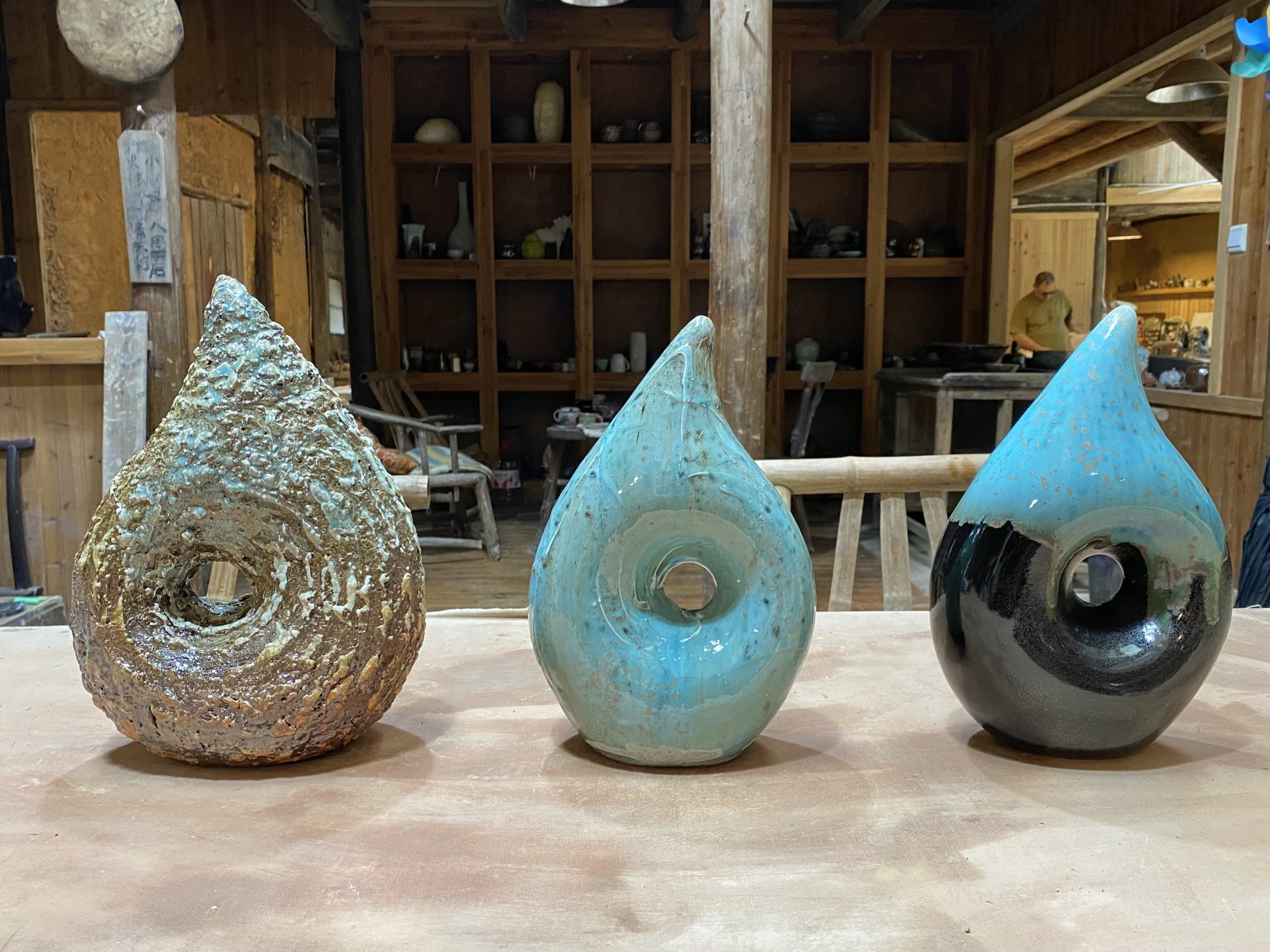
| Emori and Li collaborated to explore the same form through three different making techniques: hand-building, slab molding, and cast molding. Jackson Li glazed each piece. |
Expositions du Congrès
Le Congrès 2026 proposait diverses expositions des membres de l'AIC en marge des conférences.
(lire la suite...)Expositions satellites du Congrès
Outre plusieurs expositions des membres de l'AIC, les organisateurs ont le plaisir de présenter des expositions de groupes régionales et thématiques.
(lire la suite...)Programme
Le Congrès propose un programme riche de six jours consacré à la céramique et à la découverte des merveilles de Jingdezhen.
(lire la suite...)Programme académique
Le congrès AIC 2026 proposait différents formats de présentation conçus pour stimuler et enrichir l'échange d'idées.
(lire la suite...)